





The new UZUMASA KYOTO VILLAGE has opened "Oike Machiya" where visitors can experience Japanese culture.
In a space that mimics Edo period architecture while also possessing a somewhat modern atmosphere, Sado (Japanese tea ceremony) ceremony classes are offered, along with daily rotating classes in Kado (flower arrangement) arrangement, Noh, Kyogen (traditional short comedic drama), Ohayashi (Japanese festival music) (traditional Japanese music), Kyomai (Kyoto dance), and shamisen (three-stringed instrument). This time, we experienced the Sado (Japanese tea ceremony), which is the only cultural experience scheduled to be held every day.
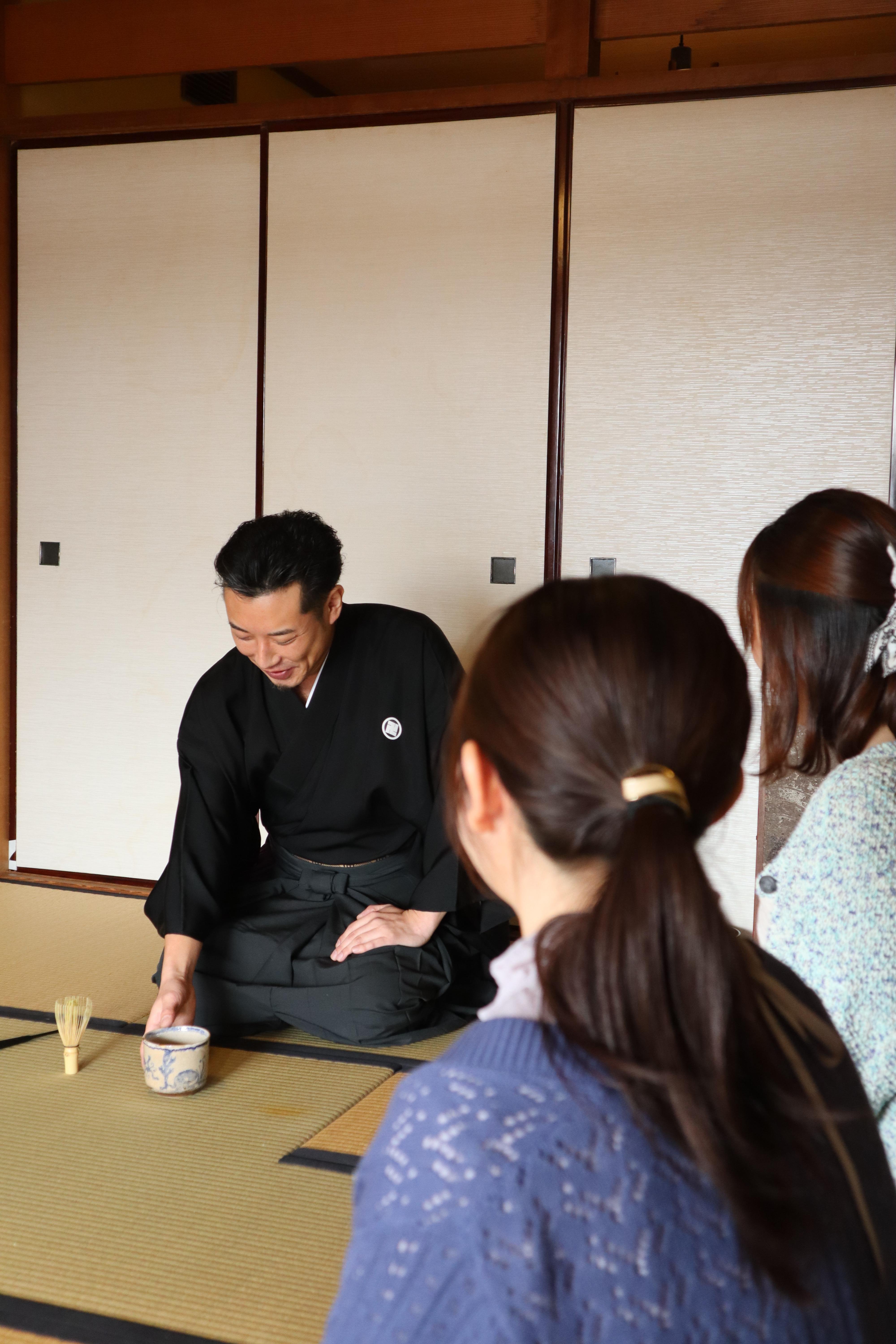
Our instructor will be Mr. Ruan Fukuda, the 7th generation head of the Yabuuchi Zuichikuan school.
Professor Fukuda, thank you in advance!
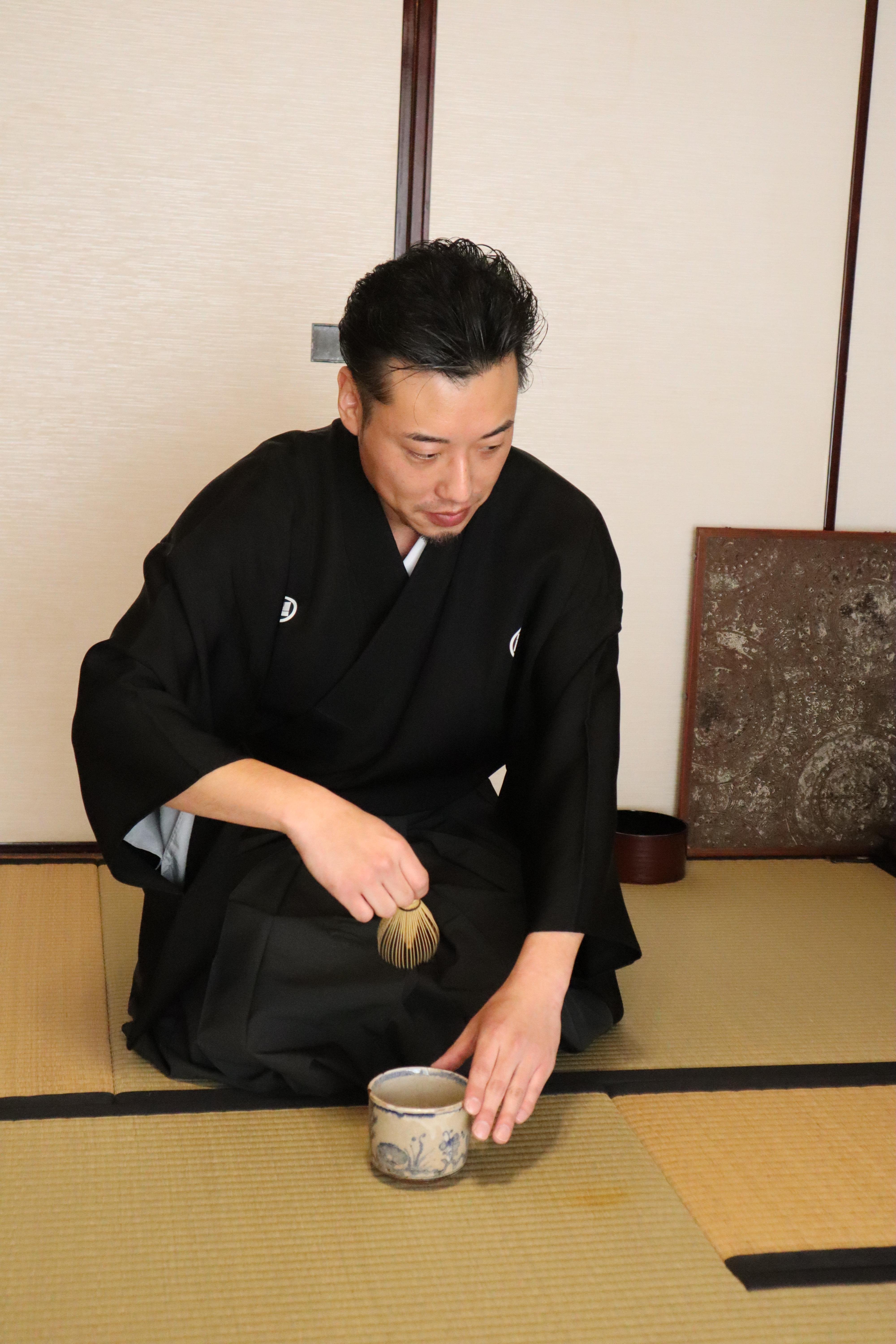
Professor Fukuda: Thank you for joining us. What kind of image do you all have of Sado (Japanese tea ceremony)? Some of you may feel that it is difficult to get into, but the act of drinking tea is actually a very everyday thing, and you can start Sado (Japanese tea ceremony) if you have a tea whisk.
Today, I'd like to share a few tips on Sado (Japanese tea ceremony), and without being bound by fixed forms, I hope to create a time where everyone can think of Sado (Japanese tea ceremony) as "fun" and "want to do more."
_________________________________________
1. Observe the teacher's tea ceremony.
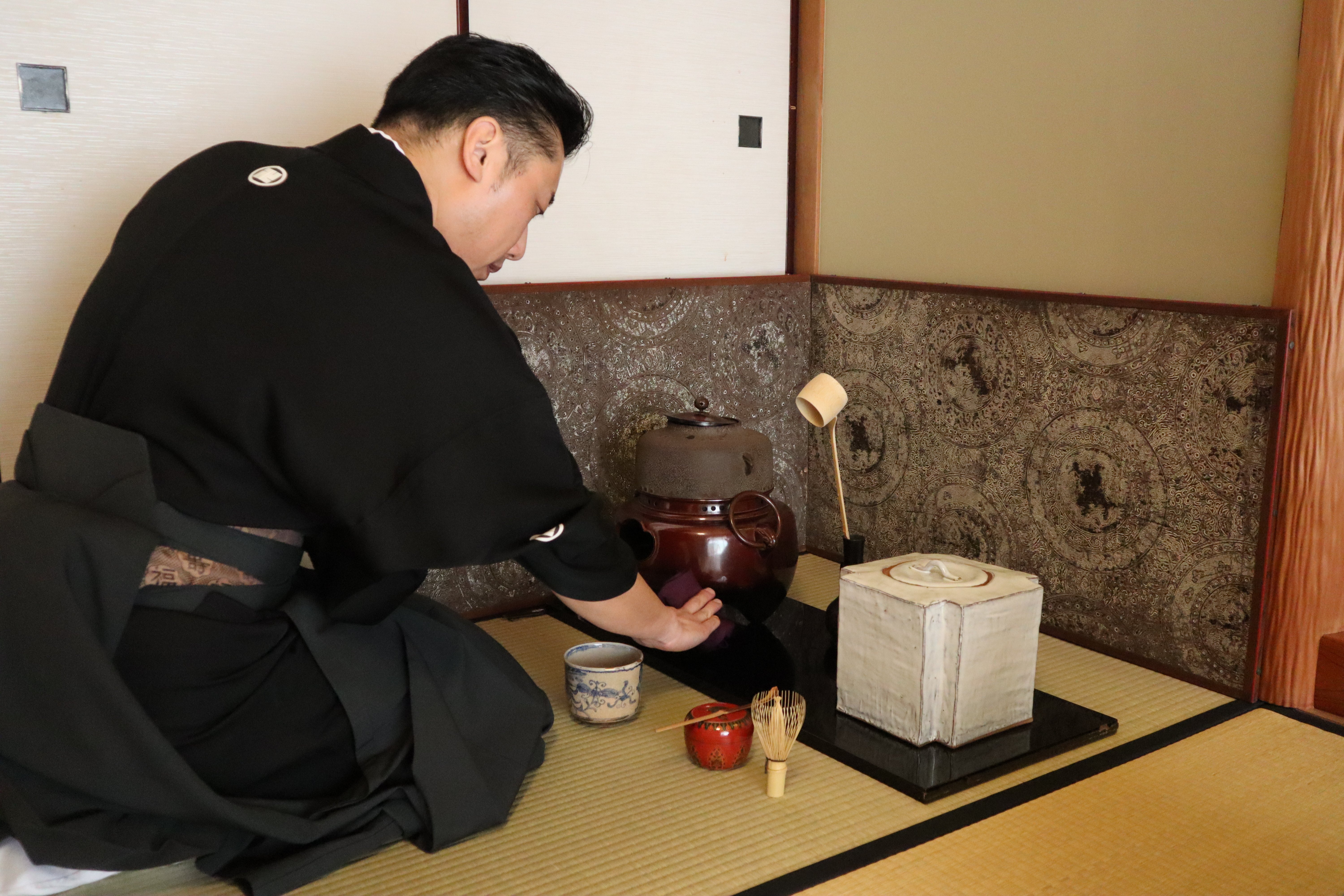
"Temae" refers to a series of actions performed to clean Sado (Japanese tea ceremony). Professor Fukuda's school is the Yabuuchi-ryu, a samurai-style Sado (Japanese tea ceremony), and as the name suggests, it is characterized by movements that are brave and valiant, like those of a samurai.
2. Enjoy the tea and sweets.
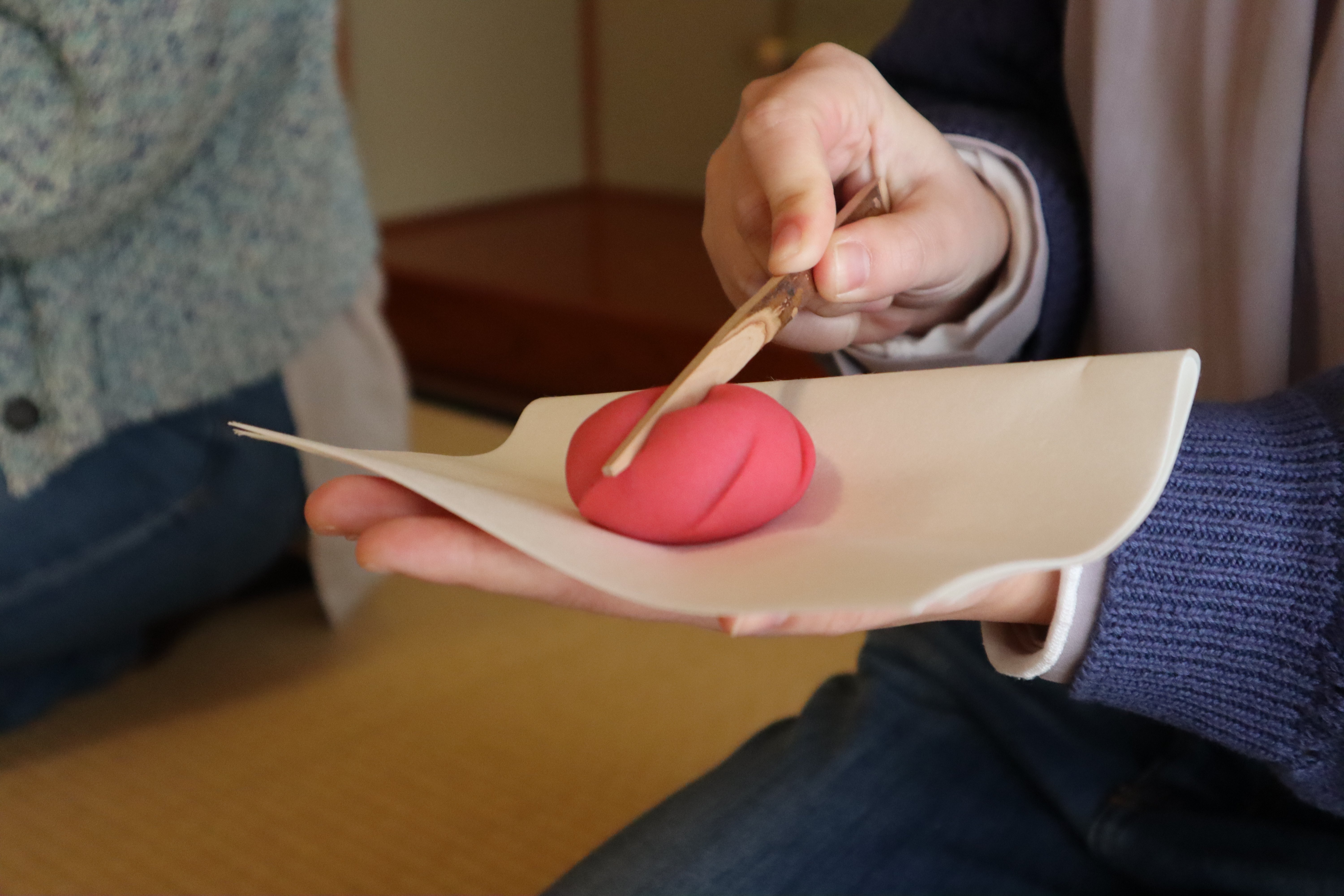
You can enjoy seasonal tea sweets.
3. Prepare the matcha tea.
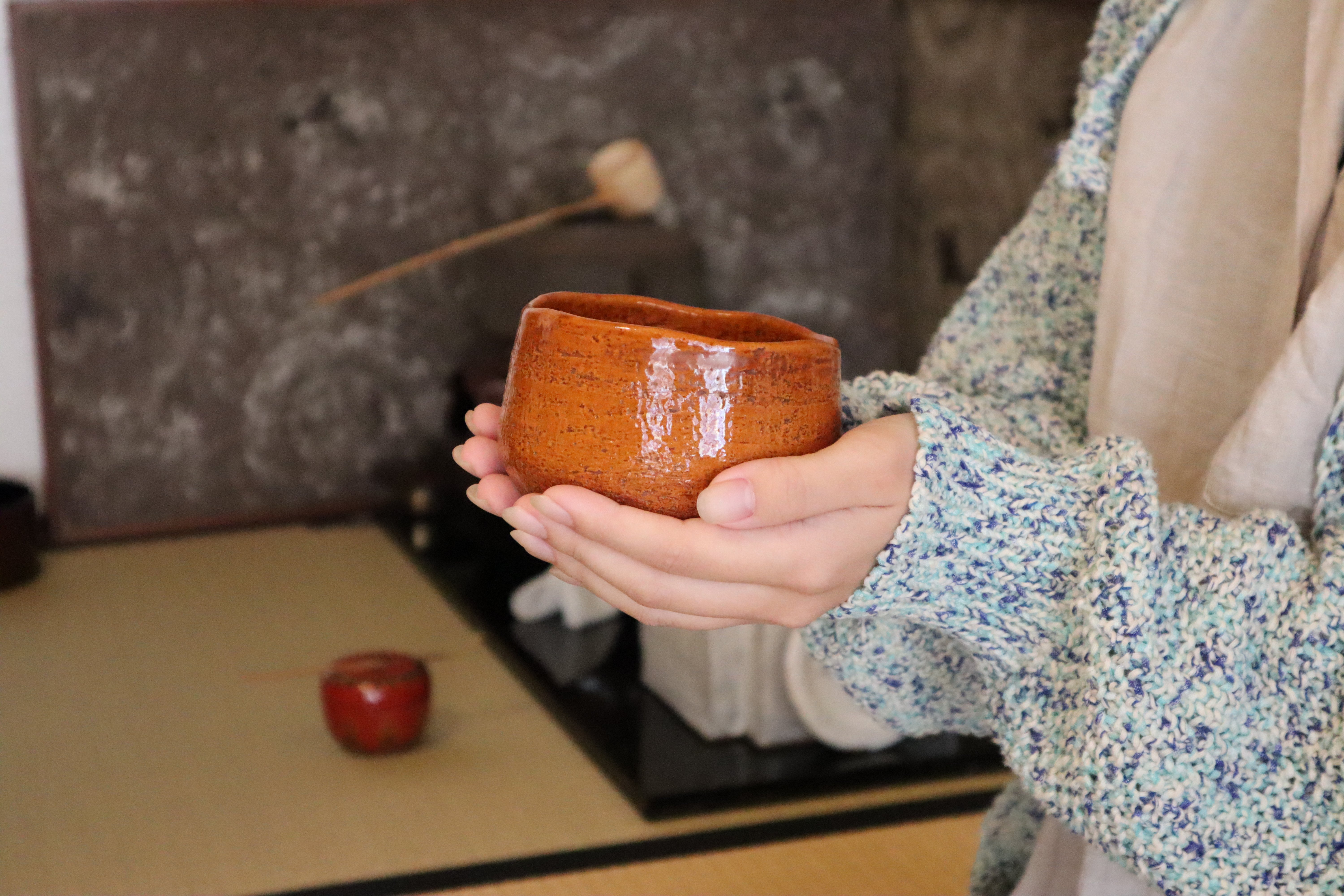
When preparing matcha, pay attention to the bowl as well.
The teacher's tools and utensils are said to include some imported from abroad, resulting in a rich variety. It seems that items not originally made as Sado (Japanese tea ceremony) are often repurposed. Apparently, Sen no Rikyu used a fish scooping basket as a flower vase and incorporated everyday objects into Sado (Japanese tea ceremony). I felt that Sado (Japanese tea ceremony) is a culture full of creativity.
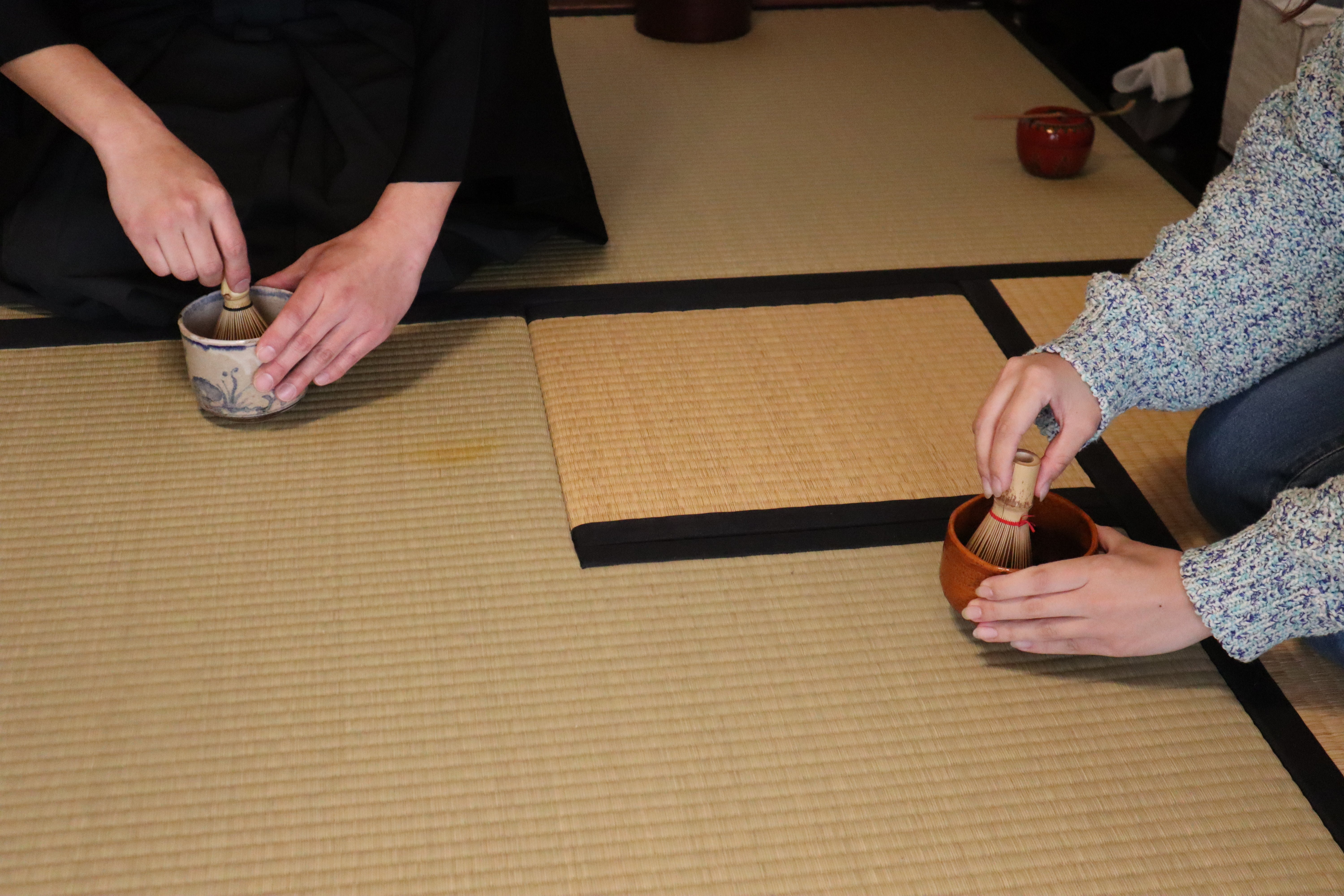
Professor Fukuda: Now, let's finally start whisking the matcha. Remember that little trick where you hold a pen with your fingers and shake it up and down, making it look like it's bending? Keep that movement in mind and quickly whisk the matcha.
We all simultaneously swung our tea whisks. We enjoyed comparing the bubbles that everyone created.
5. Savor the taste of matcha.
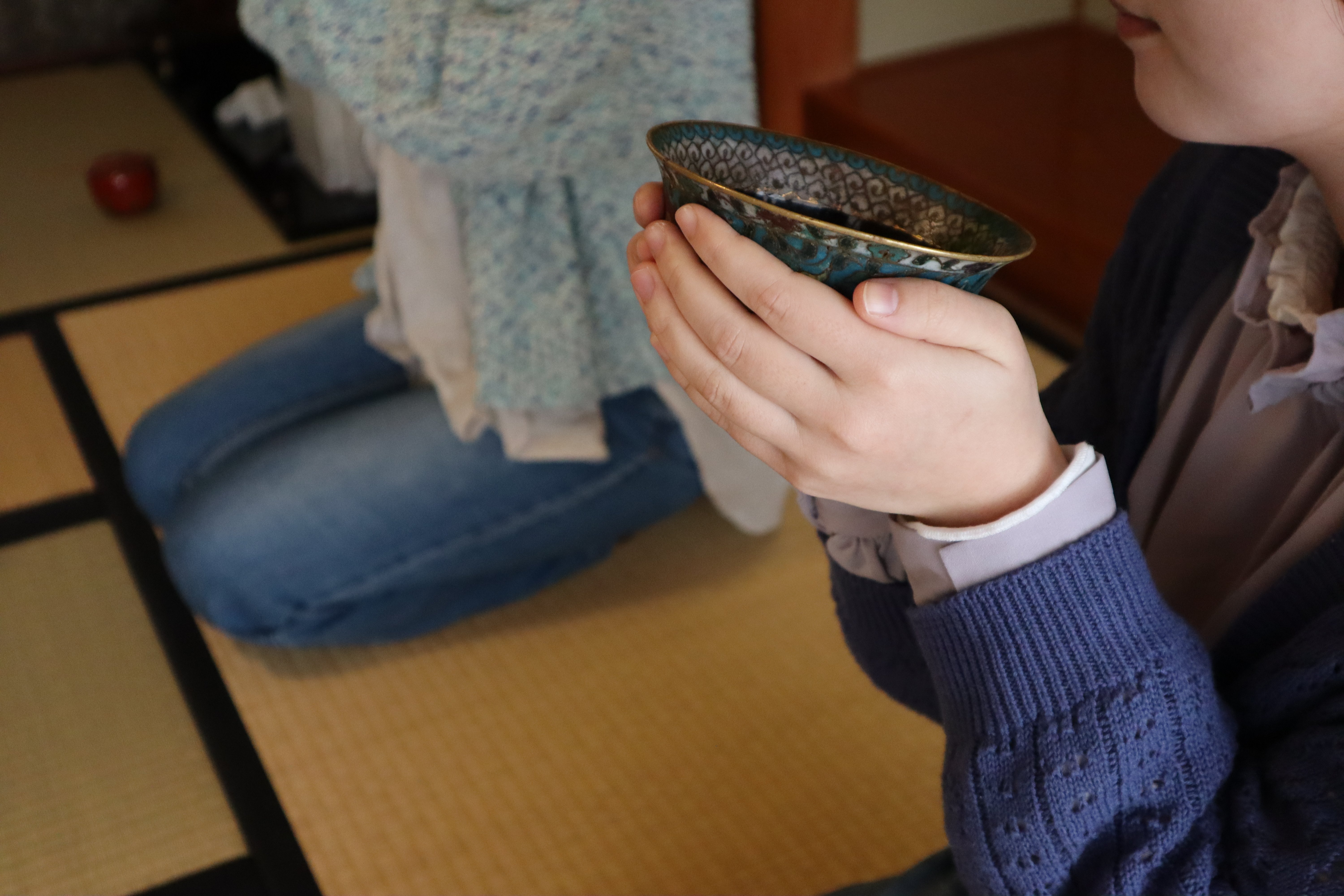
Professor Fukuda: Rather than formal language, let's all share our honest and genuine thoughts here.
A single word from the instructor helped us all relax during the experience. We were able to enjoy communicating with each other and have a wonderful time.
_________________________________________
Q&A
Q. What aspects of Sado (Japanese tea ceremony) do you hope our customers will find appealing through this experience?
A. We want people to know that Sado (Japanese tea ceremony) is full of the playful spirit of the Japanese people. Like music and sports, Sado (Japanese tea ceremony) is a culture that is very much a part of everyday life. There was a time when having extensive knowledge was considered special, but we would be happy if Sado (Japanese tea ceremony) experience at UZUMASA KYOTO VILLAGE leaves you with simple but positive feelings such as "fun," "beautiful," and "cool."
Q. Is there anything in particular you would like us to pay attention to from this experience?
A. It's the atmosphere of "stillness" and "movement." Sado (Japanese tea ceremony) has a dignified stillness and a sense of tension, which is very pleasant. At the same time, you can enjoy interacting with others while preparing tea. I would like everyone to experience both of these aspects.
Q. What positive impact do you think learning Sado (Japanese tea ceremony) will have on your daily life?
A. In today's world, where we are constantly pressed for time by smartphones and social media, it is very important to have time to relax. The time spent preparing tea, the time spent waiting. At first glance, it may seem like meaningless time, but that time is precisely what is important. I hope that this Sado (Japanese tea ceremony) experience will be an opportunity for you to realize the value of such time.
_________________________________________
Please come and enjoy this special Sado (Japanese tea ceremony) experience that can only be had at UZUMASA KYOTO VILLAGE. Thank you very much, Ms. Fukuda, for this time.
Please check here for the schedule of cultural experience classes and other information.